

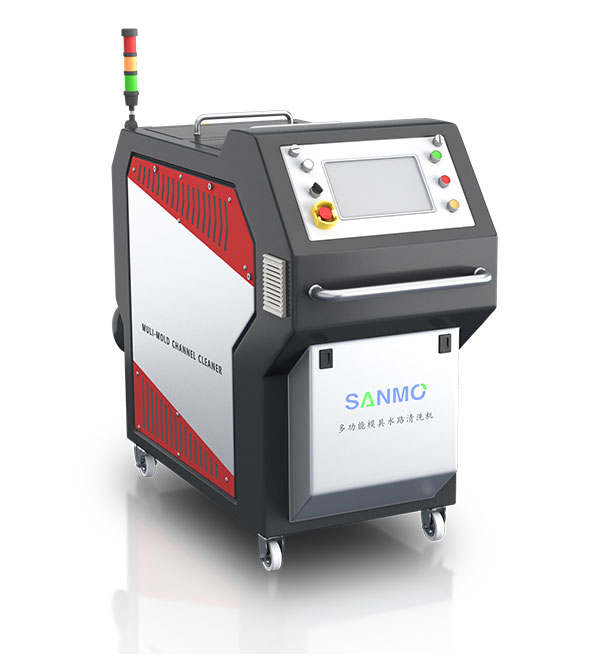
Mold water channel cleaning machines: Optimizing Rapid Mold Cleaning Cycles
Industry Background and Market Demand
Injection molding and die-casting industries rely heavily on efficient mold maintenance to ensure consistent product quality and minimize downtime. Over time, contaminants such as mineral deposits, rust, and residual polymers accumulate in mold cooling channels, reducing heat transfer efficiency and increasing cycle times. Traditional cleaning methods—manual brushing or chemical soaking—are labor-intensive and often ineffective for deep channel cleaning.
The demand for automated mold water channel cleaning machines has surged due to the need for:
- Faster production cycles: Unclean channels lead to uneven cooling, extending cycle times.
- Extended mold lifespan: Corrosion and blockages accelerate wear.
- Sustainability compliance: Chemical cleaning waste disposal faces stricter regulations.
Automated cleaning systems address these challenges by delivering precision, repeatability, and reduced environmental impact.
Core Technology: How Mold Water Channel Cleaning Machines Work
These machines use high-pressure water jets, ultrasonic cavitation, or a combination of both to remove contaminants. Key components include:
1. High-Pressure Pump System (100–500 bar): Generates forceful water streams to dislodge deposits.
2. Multi-Directional Nozzles: Rotating or oscillating jets ensure full channel coverage.
3. Filtration and Recycling Unit: Captures debris and recycles water to minimize waste.
4. Programmable Logic Controller (PLC): Automates pressure, flow rate, and cycle duration.
Advanced systems integrate real-time monitoring to assess cleaning effectiveness via flow sensors or cameras.
Design and Manufacturing Considerations
Materials and Construction
- Pump Housing: Stainless steel (316L) resists corrosion from high-pressure water and chemicals.
- Hoses and Fittings: Reinforced polymers or braided steel withstand repeated pressure cycles.
- Nozzle Design: Tungsten carbide tips resist abrasion from particulate matter.
Performance Factors
- Pressure Range: Higher pressure (300+ bar) improves cleaning but requires robust components.
- Flow Rate: Optimal 10–30 L/min balances speed and resource efficiency.
- Temperature Control: Heated water (50–80°C) enhances dissolution of grease and polymers.
Critical Factors Affecting Performance
1. Water Quality – Hard water causes scaling; pre-filtration or deionization is recommended.
2. Nozzle Wear – Erosion reduces jet effectiveness; regular inspection is necessary.
3. Channel Geometry – Complex bends require flexible nozzles or adjustable pressure profiles.
4. Chemical Compatibility – Some systems use eco-friendly detergents; material selection must account for this.
Supplier Selection Criteria
When sourcing a mold cleaning system, manufacturers should evaluate:
- Customization Capability: Adaptability to different mold sizes and channel diameters.
- After-Sales Support: Availability of spare parts and maintenance services.
- Regulatory Compliance: CE, UL, or ISO certifications ensure safety and performance standards.
- Energy Efficiency: Systems with variable-speed pumps reduce operational costs.
Industry Challenges and Common Issues
Pain Points
- Incomplete Cleaning: Stubborn deposits in narrow channels may require multiple cycles.
- Downtime vs. Cleaning Frequency: Frequent cleaning improves performance but disrupts production.
- Residual Moisture: Inadequate drying leads to mold corrosion; some systems integrate air-blowing functions.
FAQ
Q: How often should mold water channels be cleaned?
A: Depending on usage, every 500–2,000 cycles or when cooling efficiency drops by 10–15%.
Q: Can these machines clean micro-channel molds?
A: Yes, specialized nozzles (0.5–2 mm diameter) are available for precision applications.
Applications and Case Studies
Automotive Molding
A German auto parts supplier reduced cycle times by 12% after implementing automated cleaning, eliminating mineral buildup in high-volume production molds.
Medical Device Manufacturing
A Swiss manufacturer achieved consistent part quality by switching from chemical baths to ultrasonic-assisted water jet cleaning, meeting stringent hygiene standards.
Current Trends and Future Developments
1. IoT Integration – Remote monitoring and predictive maintenance via cloud-based analytics.
2. Green Technologies – Closed-loop water systems and biodegradable cleaning agents.
3. Hybrid Systems – Combining ultrasonic and high-pressure methods for challenging deposits.
Conclusion
Mold water channel cleaning machines are transforming maintenance protocols in precision manufacturing. By optimizing cleaning cycles, these systems enhance productivity, reduce waste, and extend tool life. As automation and sustainability demands grow, advancements in pressure control, material science, and smart monitoring will further refine their role in industrial mold maintenance.
For manufacturers evaluating these systems, prioritizing adaptability, reliability, and energy efficiency will ensure long-term operational benefits.
@2024 Shanmo Precision Machinery (Kunshan) Co., Ltd. All rights reserved. Mold waterway cleaning machine,
electrolytic mold cleaning machine, mold cleaning machine manufacturer
TEL:+86 512-55001520
whats app:+86 15599099006 / +86 15599099098
E-Mail:sanmo030788@gmail.com
Add:No. 56, Yangjiaqiao Road, Zhoushi Town, Kunshan City Jiangsu Province


This website uses cookies to ensure you get the best experience on our website.
 Español
 Pусский
 العربية
 Tiếng Việt



 Your phone
 E-mail
Comment
(0)