

In precision manufacturing and injection molding, maintaining clean mold surfaces is essential to ensure product quality, dimensional accuracy, and consistent cycle times. Over time, molds accumulate carbon deposits, oxidation, and polymer residues, particularly in high-volume production or when molding thermoplastics prone to degradation. Traditional cleaning methods, such as manual scraping, chemical soaking, or abrasive techniques, often fail to reach complex cavities and cooling channels, may damage mold surfaces, and consume excessive labor and time. Electrolytic mold cleaning machines address these challenges by providing a controlled, repeatable method to remove internal and surface contaminants efficiently. Growing demands for high-precision components in automotive, electronics, medical, and consumer industries have driven the adoption of automated electrolytic cleaning solutions to sustain production efficiency and extend mold life.
Electrolytic mold cleaning relies on controlled electrochemical reactions to dissolve unwanted residues without mechanical abrasion. The mold is immersed in a conductive solution, and a low-voltage electric current is applied. The process selectively removes carbonized layers, rust, and polymer build-up from cavities, channels, and surface features. Key technologies include adjustable voltage and current controls, programmable cleaning cycles, and solution circulation to ensure uniform exposure. Some advanced systems integrate ultrasonic-assisted electrolysis to enhance cleaning in hard-to-reach geometries. By combining these technologies, the machines achieve thorough cleaning while preserving mold tolerances and surface finish integrity.
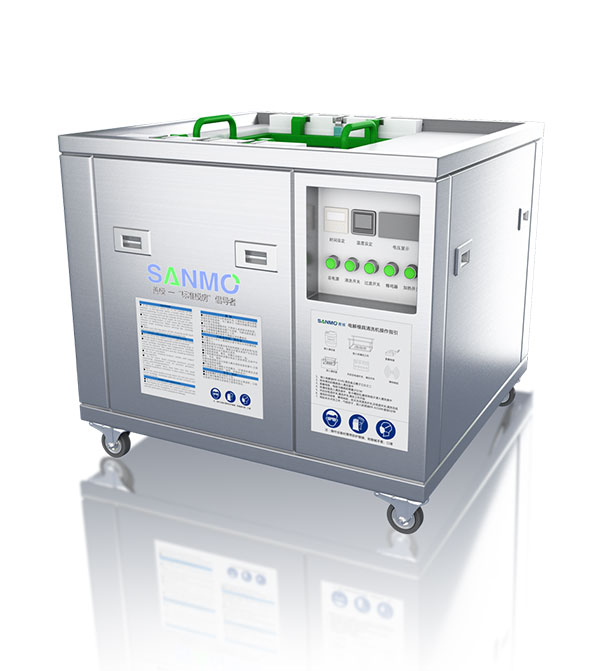
Electrolytic mold cleaning machines typically comprise a corrosion-resistant cleaning tank, a precision power supply, a control unit, and fixture systems to secure molds during processing. The tank is often fabricated from stainless steel or coated alloys to withstand repeated exposure to electrolyte solutions. Pumps and circulation systems maintain uniform flow and solution chemistry, ensuring consistent reaction rates across mold surfaces. The power supply allows fine adjustments to voltage and current based on mold material and deposit type. Fixtures are designed to hold molds securely, ensuring full exposure to the electrochemical process. High manufacturing precision of components is critical to prevent leaks, maintain stable current distribution, and achieve repeatable results, making quality control during assembly essential.
Several factors influence the efficiency of electrolytic cleaning. Channel geometry, cavity depth, and surface complexity determine accessibility and current distribution. Deposit composition, including carbon layers, oxidation, or polymer residues, dictates the appropriate electrical parameters and cleaning duration. Water quality, electrolyte composition, temperature, and solution circulation rate also impact reaction efficiency. Incorrect settings can result in uneven cleaning, surface pitting, or incomplete residue removal. Therefore, careful calibration of operational parameters and adherence to recommended protocols are critical for achieving optimal results and preserving mold integrity.
Selecting a reliable supplier is vital for consistent cleaning performance. Factors include equipment reliability, technical expertise in mold maintenance, availability of spare parts, and local service support. Suppliers with experience in diverse mold types—automotive, electronics, and medical-grade molds—offer higher assurance of compatibility and cleaning efficacy. Vendors providing training, detailed manuals, and integration support for preventive maintenance workflows facilitate smoother adoption, minimize downtime, and enhance overall operational efficiency.
Despite technological advances, manufacturers face persistent challenges. Intricate or narrow channels can hinder uniform current distribution, requiring multiple or prolonged cleaning cycles. Excessive or uneven residue accumulation may increase maintenance intervals and reduce production uptime. Manual cleaning remains inconsistent and labor-intensive, sometimes causing surface scratches or dimensional deviations. Scheduling maintenance without interrupting production is a recurring concern. Electrolytic cleaning machines mitigate many of these issues, but proper operation, parameter selection, and routine monitoring are essential to prevent damage and maximize cleaning efficiency.
Electrolytic mold cleaning machines are widely applied across industries requiring high-precision injection molding. Automotive mold shops utilize them to maintain molds for engine components, safety-critical plastic parts, and interior panels, ensuring uniform cycle times and part quality. Electronics manufacturers employ these machines for connectors, housings, and precision plastic casings to prevent micro-defects caused by residue build-up. Medical device production benefits from cleaning intricate molds used for surgical instruments, diagnostic components, and small-scale polymer parts, achieving stringent quality and hygiene standards. Across applications, these machines contribute to longer mold life, reduced scrap rates, and higher production efficiency.
Electrolytic mold cleaning technology is evolving toward increased automation, energy efficiency, and integration with predictive maintenance systems. Modern machines feature programmable cleaning cycles, real-time monitoring, and data logging to track mold condition and optimize schedules. Ultrasonic-assisted electrolysis is emerging to address increasingly complex mold designs, improving cleaning speed and uniformity. Closed-loop systems are gaining attention for water and electrolyte reuse, aligning with sustainability objectives and reducing operational costs. As precision manufacturing continues to demand higher efficiency, lower defect rates, and sustainable practices, electrolytic mold cleaning machines are expected to play a growing role in maintaining production reliability.
Q1: Can electrolytic cleaning machines be used on all mold materials?
Most steel and aluminum molds are compatible; voltage and current should be adjusted to prevent surface alteration.
Q2: How often should molds be cleaned?
Cleaning frequency depends on production volume, material type, and mold complexity. Regular preventive maintenance is recommended.
Q3: Does the process damage delicate surfaces?
When properly configured, the process removes residues without mechanical abrasion, preserving mold geometry and surface finish.
Q4: What types of residues can be removed?
Carbon deposits, oxidation, rust, and polymer build-up are effectively eliminated using electrolytic cleaning.
@2024 Shanmo Precision Machinery (Kunshan) Co., Ltd. All rights reserved. Mold waterway cleaning machine,
electrolytic mold cleaning machine, mold cleaning machine manufacturer
TEL:+86 512-55001520
whats app:+86 15599099006 / +86 15599099098
E-Mail:sanmo030788@gmail.com
Add:No. 56, Yangjiaqiao Road, Zhoushi Town, Kunshan City Jiangsu Province


This website uses cookies to ensure you get the best experience on our website.
 Español
 Pусский
 العربية
 Tiếng Việt



 Your phone
 E-mail
Comment
(0)