

In high-precision manufacturing sectors such as automotive, electronics, medical devices, and consumer products, mold maintenance is a critical factor affecting production efficiency. Over time, molds accumulate carbon deposits, oxidation layers, and polymer residues, which impair surface quality and reduce dimensional accuracy. Traditional maintenance methods, including manual scraping, chemical soaking, or abrasive cleaning, are time-consuming, labor-intensive, and often fail to reach complex cavities or cooling channels. As production volumes increase and tolerances tighten, manufacturers require solutions that minimize maintenance downtime while ensuring molds remain in optimal condition. Electrolytic mold cleaning machines have emerged as a reliable and efficient approach to address these challenges, enabling continuous high-volume production with reduced operational interruptions.
Electrolytic mold cleaning utilizes controlled electrochemical reactions to remove contaminants without mechanically abrading mold surfaces. The mold is immersed in a conductive electrolyte solution, and a low-voltage electrical current selectively dissolves carbon deposits, rust, and polymer residues. Some advanced machines integrate ultrasonic-assisted cleaning to enhance penetration into narrow channels and micro-cavities. Programmable control units allow operators to adjust voltage, current, and cycle duration according to mold geometry and deposit composition. These features ensure consistent cleaning, even for intricate multi-cavity molds, restoring mold surfaces to optimal condition with minimal labor intervention.
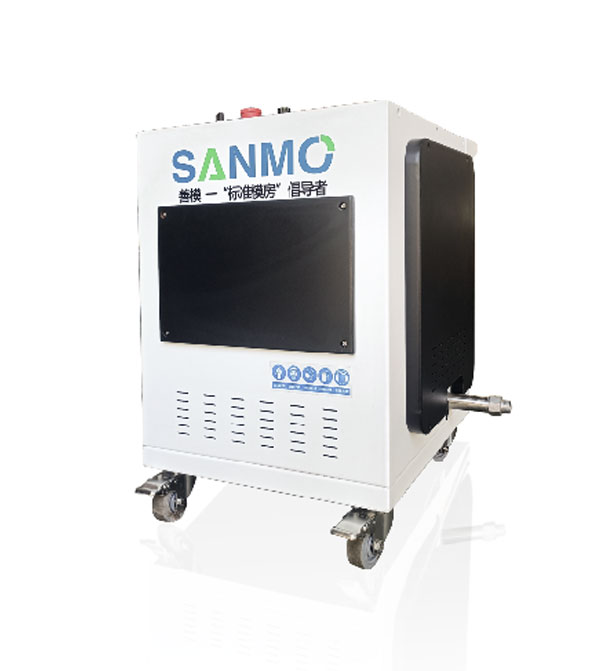
A typical electrolytic mold cleaning machine comprises a corrosion-resistant tank, high-precision power supply, solution circulation system, control unit, and mold fixtures. Tanks are often made of stainless steel or coated alloys to withstand repeated exposure to electrolytes. Pumps maintain uniform solution flow, ensuring effective contact with mold surfaces, while fixtures securely hold molds to prevent movement during cleaning. Precision components, including current distributors and flow regulators, enable uniform electrochemical reaction across all mold cavities. The manufacturing process emphasizes tight tolerances and durable construction to ensure long-term reliability, consistent performance, and repeatable cleaning results.
Several variables influence cleaning efficiency and quality. Mold geometry, cavity depth, channel design, and surface complexity affect the distribution of current and exposure to the electrolyte. Deposit type, ranging from carbonized layers to oxidation and polymer buildup, determines required voltage, current, and cleaning duration. Electrolyte composition, temperature, and circulation rate also impact the cleaning process. Incorrect settings can result in uneven cleaning, incomplete residue removal, or potential damage to delicate surfaces. Careful calibration, monitoring, and adherence to recommended operational protocols are essential to maximize cleaning effectiveness while preserving mold integrity.
Choosing the right supplier is crucial for achieving reliable cleaning performance and minimizing downtime. Key selection criteria include equipment reliability, experience with precision molds, local technical support, and spare parts availability. Suppliers with experience across automotive, electronics, and medical mold applications can provide tailored solutions for complex geometries and material types. Additionally, access to operator training, comprehensive manuals, and integration support for preventive maintenance programs ensures smooth adoption, reduces operational risks, and contributes to consistent production efficiency.
Despite technological advancements, certain challenges persist. Intricate molds with deep or narrow channels may require multiple or extended cleaning cycles to ensure thorough residue removal. Accumulated deposits can slow maintenance schedules and reduce production uptime. Manual cleaning methods remain inconsistent, posing risks of surface damage or dimensional deviation. Coordinating mold maintenance within high-volume production schedules is a persistent challenge. Automated electrolytic cleaning machines mitigate many of these issues, but proper operation, cycle optimization, and periodic monitoring remain critical for achieving reliable results.
Electrolytic mold cleaning machines are widely adopted across industries requiring high-precision injection molding. Automotive manufacturers use them to maintain molds for engine components, interior panels, and safety-critical plastic parts, ensuring consistent cycle times and high-quality output. Electronics producers employ these machines to clean molds for connectors, housings, and micro-structured components, preventing defects caused by residue accumulation. Medical device manufacturers rely on electrolytic cleaning for intricate molds used in surgical instruments, diagnostic devices, and microfluidic components, maintaining strict quality and hygiene standards. Across all applications, the machines contribute to reduced maintenance downtime, extended mold life, and improved production consistency.
The industry is moving toward automation, smart monitoring, and sustainability. Modern machines feature programmable cycles, sensor-based feedback, and data logging to track mold condition, optimize cleaning schedules, and prevent unexpected downtime. Ultrasonic-assisted electrolysis is increasingly used for complex molds, enhancing cleaning efficiency in hard-to-reach areas. Environmentally friendly designs, including closed-loop electrolyte systems, reduce water and chemical consumption while minimizing operational costs. As molds continue to become more intricate and production volumes grow, electrolytic mold cleaning machines are expected to play a central role in minimizing downtime, improving efficiency, and supporting long-term mold performance.
Q1: Can electrolytic cleaning machines handle all mold materials?
Steel and aluminum molds are commonly compatible; settings must be adjusted to protect surface integrity.
Q2: How frequently should molds be cleaned electrolytically?
Frequency depends on production volume, mold complexity, and material type. Preventive maintenance ensures consistent performance.
Q3: Can the process damage delicate mold surfaces?
Properly configured electrolytic cleaning removes residues without mechanical abrasion, preserving surface finish and dimensional accuracy.
Q4: What types of residues can be removed?
Carbon deposits, oxidation layers, rust, and polymer residues can all be efficiently eliminated with electrolytic cleaning.
@2024 Shanmo Precision Machinery (Kunshan) Co., Ltd. All rights reserved. Mold waterway cleaning machine,
electrolytic mold cleaning machine, mold cleaning machine manufacturer
TEL:+86 512-55001520
whats app:+86 15599099006 / +86 15599099098
E-Mail:sanmo030788@gmail.com
Add:No. 56, Yangjiaqiao Road, Zhoushi Town, Kunshan City Jiangsu Province


This website uses cookies to ensure you get the best experience on our website.
 Español
 Pусский
 العربية
 Tiếng Việt



 Your phone
 E-mail
Comment
(0)