

Injection molding has become indispensable in modern manufacturing, enabling the production of high-precision components for automotive, electronics, medical devices, and consumer goods. As molds become more complex, incorporating multi-cavity designs, intricate cooling channels, and microstructures, maintaining their operational efficiency has become increasingly challenging. Deposits such as scale, rust, and polymer residues accumulate in water channels, reducing cooling efficiency, increasing cycle times, and affecting product quality. Traditional cleaning methods, including manual scraping or chemical soaking, often fail to address these issues efficiently, especially for intricate mold geometries. Consequently, industries are
increasingly turning to mold water channel cleaning machines to ensure consistent mold performance and extend service life.
Mold water channel cleaning machines employ mechanical, chemical, and ultrasonic principles to remove deposits from internal cooling channels. High-pressure water jets dislodge scale and polymer residues, while ultrasonic-assisted cleaning generates cavitation that reaches narrow or branched channels inaccessible to conventional methods. Programmable control units allow operators to adjust flow rate, pressure, and cleaning duration to match mold complexity and residue type. Some systems integrate automated cycles and solution circulation to guarantee uniform cleaning across multi-cavity molds. These technologies collectively enhance cooling efficiency, reduce downtime, and maintain mold dimensional accuracy, making them critical for high-precision production.
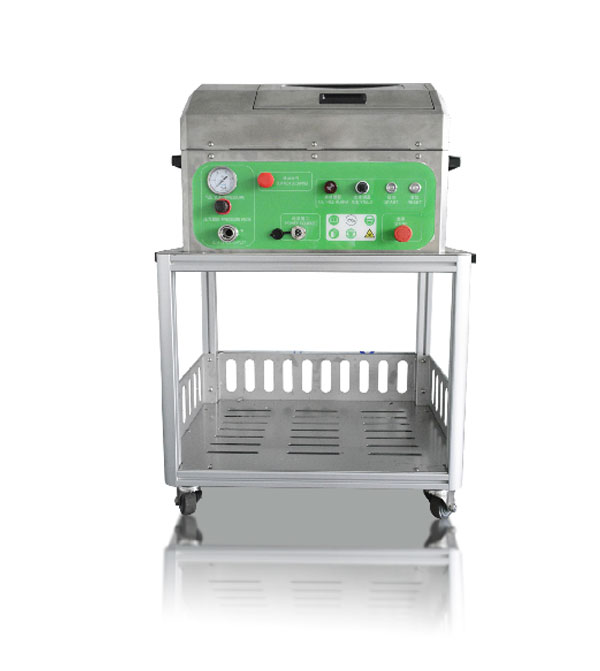
A typical mold water channel cleaning machine comprises a corrosion-resistant cleaning tank, high-pressure pumps, circulation systems, control units, and secure mold fixtures. Tanks are usually constructed from stainless steel or coated alloys to withstand repeated exposure to water and chemical solutions. Pumps provide adjustable pressure and flow, ensuring uniform distribution of cleaning agents within complex channels. Fixtures hold molds firmly during operation, preventing movement and uneven exposure. Precision-engineered components and robust manufacturing processes are essential to maintain consistent performance, minimize operational wear, and ensure long-term reliability, which is particularly important for high-volume industrial applications.
Several factors impact the effectiveness of mold water channel cleaning. Channel geometry, including length, diameter, and curvature, influences the reach and intensity of cleaning forces. The type and thickness of deposits—ranging from mineral scale to polymer residues—determine the required pressure, flow, and cycle duration. Water quality, temperature, and chemical composition also affect cleaning efficiency. Improper calibration or inconsistent process control can lead to incomplete residue removal, reduced cooling efficiency, or potential damage to delicate channels. Maintaining consistent cleaning parameters and monitoring process performance are crucial to achieving optimal results.
Selecting the right supplier is critical to achieving reliable and repeatable cleaning results. Key considerations include equipment reliability, technical expertise in precision mold maintenance, availability of local service and support, and access to spare parts. Suppliers with experience across multiple industries, such as automotive, electronics, and medical manufacturing, can offer tailored solutions for complex molds and challenging geometries. Operator training, comprehensive documentation, and software support for preventive maintenance programs are additional factors that help manufacturers optimize machine utilization and reduce operational downtime.
Despite advancements in cleaning technology, challenges persist. Molds with deep, branched, or micro-channel designs may require extended cleaning cycles to achieve complete residue removal. Accumulated deposits can slow maintenance schedules and disrupt production timelines. Manual cleaning methods remain labor-intensive and inconsistent, posing risks of scratches, dimensional deviation, or partial cleaning. Scheduling cleaning operations without impacting high-volume production is another common concern. Automated mold water channel cleaning machines mitigate many of these issues, but proper setup, monitoring, and periodic maintenance are essential for consistent performance.
Mold water channel cleaning machines are widely adopted in industries where precision and reliability are critical. Automotive manufacturers use these machines to maintain engine component molds, interior panels, and safety-critical parts, ensuring uniform cooling and dimensional accuracy. Electronics manufacturers rely on them for connectors, housings, and micro-structured components, preventing defects caused by residue accumulation. In the medical device industry, these machines clean molds used for surgical instruments, diagnostic components, and microfluidic devices, meeting stringent quality and hygiene standards. Across applications, efficient cleaning enhances mold service life, reduces scrap rates, and improves overall production consistency.
Industry adoption of mold water channel cleaning machines continues to expand as manufacturers embrace automation, process monitoring, and sustainability. Modern systems feature programmable cleaning cycles, sensor-based feedback, and data logging to optimize maintenance schedules and track mold condition. Ultrasonic-assisted cleaning is gaining traction for its ability to reach intricate channels and micro-cavities effectively. Environmentally friendly closed-loop systems recycle water and cleaning solutions, reducing waste and operational costs. As production demands grow and mold complexity increases, these machines are expected to play an increasingly vital role in maintaining efficiency, reducing downtime, and supporting sustainable manufacturing practices.
Q1: How often should molds be cleaned using these machines?
Cleaning frequency depends on production volume, mold complexity, and material type. Regular preventive maintenance ensures consistent cooling performance.
Q2: Can these machines clean all types of mold geometries?
Yes, advanced machines handle multi-cavity, branched, and micro-channel molds through adjustable cycles and ultrasonic-assisted cleaning.
Q3: Are there risks of damaging molds during cleaning?
Properly calibrated machines clean residues without mechanical abrasion, preserving surface finish and dimensional accuracy.
Q4: What types of deposits can be removed effectively?
Scale, rust, polymer residues, and other obstructions within cooling channels are efficiently removed using these machines.
@2024 Shanmo Precision Machinery (Kunshan) Co., Ltd. All rights reserved. Mold waterway cleaning machine,
electrolytic mold cleaning machine, mold cleaning machine manufacturer
TEL:+86 512-55001520
whats app:+86 15599099006 / +86 15599099098
E-Mail:sanmo030788@gmail.com
Add:No. 56, Yangjiaqiao Road, Zhoushi Town, Kunshan City Jiangsu Province


This website uses cookies to ensure you get the best experience on our website.
 Español
 Pусский
 العربية
 Tiếng Việt



 Your phone
 E-mail
Comment
(0)