

Dry ice cleaning machines are a type of mold cleaning machine. They use high-pressure air to spray dry ice particles onto the surface of the object to be cleaned. Utilizing the physical reaction caused by the temperature difference, solid CO2 rapidly sublimates into gas.
When the -78°C dry ice particles come into contact with the dirt surface, they instantly vaporize and expand 800 times, producing a "micro-explosion" that peels off the dirt, achieving a safe, fast, efficient, and energy-saving cleaning effect.
The carbon dioxide used in dry ice cleaning comes from industrial waste gas, high-altitude air separation, etc. Dry ice cleaning itself does not produce carbon dioxide, making it convenient, fast, and environmentally friendly.
Dry Ice Cleaning Machine Working Principle

Working Principle
Dry ice cleaning utilizes the momentum change (Δmv), sublimation, and melting of high-speed moving solid dry ice particles to rapidly freeze, solidify, and embrittle dirt and oil on the surface of the object being cleaned, causing them to be peeled off.
It will not cause any damage to the surface of the object being cleaned, especially metal surfaces, nor will it affect the smoothness of the metal surface.
Comparison of Dry Ice Cleaning and Traditional Manual Cleaning

Product Model

In modern manufacturing, maintaining high-precision molds, industrial equipment, and production lines is critical for quality assurance and operational efficiency. Over time, surfaces accumulate grease, carbon deposits, rust, and other residues, which can impair performance, reduce thermal efficiency, and increase maintenance costs. Traditional cleaning methods, including abrasive blasting, chemical solvents, or manual scrubbing, are often labor-intensive, inconsistent, and potentially damaging to sensitive equipment. The Industrial Dry ice cleaning machine has emerged as a preferred solution, offering fast, non-abrasive, and environmentally friendly cleaning suitable for a wide range of industrial applications.
Dry ice cleaning uses solid CO₂ pellets as a blasting medium. When propelled onto a surface, the pellets undergo sublimation, converting directly from solid to gas. This process removes contaminants through three primary mechanisms: kinetic energy impact, thermal shock from rapid cooling, and expansion of sublimated gas that lifts residues away from surfaces. The industrial dry ice cleaning machine integrates adjustable pellet flow, air pressure, and nozzle control to achieve precise cleaning on both flat and complex geometries. Advanced models include automated conveyor integration, multi-nozzle systems, and real-time monitoring for repeatable results.
A typical industrial dry ice cleaning machine consists of a hopper for dry ice pellets, an air compressor or gas propulsion system, control electronics, and specialized nozzles. Materials are selected for durability and corrosion resistance to withstand high-pressure operation and continuous industrial use. The system is designed to balance cleaning efficiency with surface safety, preventing abrasion or deformation. Manufacturing emphasizes airtight construction, precision assembly of valves and flow regulators, and compliance with industrial safety standards, ensuring reliable operation in demanding environments.
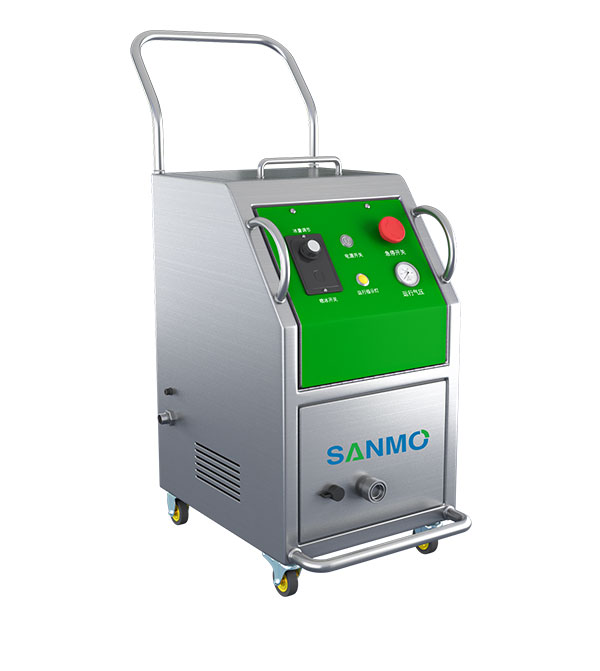
Cleaning efficiency depends on pellet size, air pressure, nozzle distance, and surface type. Larger pellets and higher pressure improve the removal of stubborn residues but may risk surface damage on delicate components. Environmental conditions, such as humidity, and proper pellet storage, also influence performance. Operators must calibrate parameters according to material sensitivity and contamination type to achieve optimal results. Consistent maintenance of air compressors, pellet feed systems, and nozzle integrity is essential to maintain long-term performance.
Choosing a reliable supplier involves evaluating technical expertise, availability of spare parts, and service support. Suppliers should provide guidance on optimal machine configuration, dry ice pellet quality, and integration with production lines. Local and global support networks are important to reduce downtime and facilitate rapid troubleshooting. Compliance with safety, environmental, and operational standards is critical when selecting both machinery and consumables.
Key challenges include uneven cleaning on complex geometries, controlling dust or CO₂ gas buildup in confined areas, and ensuring consistent pellet quality. Manual methods cannot achieve repeatable results, while chemical alternatives may leave residues or generate hazardous waste. Industrial dry ice cleaning machines address these issues by providing controlled, non-abrasive cleaning with minimal environmental impact.
In automotive manufacturing, the machines clean injection molds, dies, and production equipment without dismantling complex assemblies. Electronics manufacturers use them for delicate circuit boards and enclosures where solvent use is undesirable. Food processing plants benefit from non-toxic, residue-free cleaning of conveyors, molds, and packaging equipment. Across all sectors, these machines support preventive maintenance schedules, reduce production downtime, and extend equipment lifespan while ensuring consistent product quality.
The industrial cleaning sector is increasingly focused on automation, sustainability, and data-driven operations. Integration with robotics allows automated cleaning cycles, reducing operator exposure and labor costs. Innovations in dry ice pellet production, nozzle design, and airflow management improve energy efficiency and cleaning effectiveness. Future developments are likely to focus on intelligent monitoring systems, eco-friendly pellet sources, and seamless integration with Industry 4.0 production lines, further enhancing precision, safety, and operational efficiency.
Q1: Is dry ice cleaning safe for sensitive surfaces?
Yes, controlled pellet size and air pressure ensure non-abrasive cleaning for delicate molds, electronics, and tooling.
Q2: What industries benefit most from this technology?
Automotive, electronics, medical device manufacturing, food processing, and industrial maintenance operations gain the most.
Q3: How does this method compare environmentally to traditional cleaning?
Dry ice cleaning generates no secondary waste, is non-toxic, and uses CO₂ that sublimates harmlessly into the atmosphere.
The industrial dry ice cleaning machine represents a significant advancement in industrial maintenance technology. By combining non-abrasive, residue-free cleaning with precise control and automation, it enhances operational efficiency, extends equipment lifespan, and supports high-quality production across industries. As manufacturing trends move toward automation, sustainability, and smart monitoring, dry ice cleaning machines will continue to play a pivotal role in modern industrial maintenance strategies.
 RELATED
 RELATED
 RELATED
 RELATED
@2024 Shanmo Precision Machinery (Kunshan) Co., Ltd. All rights reserved. Mold waterway cleaning machine,
electrolytic mold cleaning machine, mold cleaning machine manufacturer
TEL:+86 512-55001520
whats app:+86 15599099006 / +86 15599099098
E-Mail:sanmo030788@gmail.com
Add:No. 56, Yangjiaqiao Road, Zhoushi Town, Kunshan City Jiangsu Province


This website uses cookies to ensure you get the best experience on our website.
 Español
 Pусский
 العربية
 Tiếng Việt



 Your phone
 E-mail