

Electrolytic mold cleaning machines were already widely used in the Japanese injection molding industry as early as 2000, helping Japanese injection molding manufacturers gain a global reputation.
Shanmo's electrolytic mold cleaning machine combines the advantages of electrolysis and ultrasonic cleaning. It uses ultrasound to deliver electrolyte into various hard-to-clean areas of the mold, such as uneven surfaces, corners, and ejector pin holes. Utilizing the principle that hydrogen molecules are the smallest molecules, hydrogen gas penetrates the dirt and is then electrolyzed back into hydrogen gas, pushing the dirt away from the mold surface.
Electrolytic Mold Cleaning Machine Working Principle

Electrolysis Working Principle
Shanmo's electrolytic mold cleaning machine combines the advantages of electrolysis and ultrasound. The mold is placed at the bottom of the cleaning basket, in contact with the negative electrode. Hydrogen molecules in the electrolyte gather from the positive electrode to the negative electrode. Because hydrogen molecules are the smallest molecules, they can penetrate the dirt adhering to the mold. When electrolysis begins, the hydrogen molecules electrolyze into hydrogen gas, which expands and pushes off the dirt from the mold surface.
Ultrasound allows the electrolyte to be flushed and vibrated, delivering the electrolyte to various hard-to-clean areas of the mold, such as uneven corners and ejector pin holes.
Product Model

In modern manufacturing industries such as automotive, electronics, and precision tooling, maintaining clean molds and metal components is essential for consistent product quality and operational efficiency. Over time, molds and metal parts accumulate rust, scale, and process residues that reduce heat transfer efficiency, impede dimensional accuracy, and increase maintenance costs. Traditional manual cleaning methods are labor-intensive, inconsistent, and can risk damaging critical surfaces. As production volumes grow and precision requirements tighten, demand for Three-tank electrolytic cleaning machines has risen steadily. These systems offer controlled, repeatable, and high-efficiency cleaning suitable for high-volume and high-precision manufacturing environments.
The three-tank electrolytic cleaning machine employs a multi-stage cleaning process, typically including pre-cleaning, electrolytic treatment, and rinsing. In the electrolytic stage, controlled electrical current facilitates the removal of rust, scale, and other contaminants through chemical reactions without abrasive action. Temperature, current density, and chemical concentration are precisely regulated to optimize cleaning effectiveness while preserving the integrity of delicate surfaces. Advanced models integrate real-time sensors to monitor conductivity, pH, and fluid flow, ensuring consistent results across complex geometries.
A typical system consists of three interconnected tanks, circulation pumps, filtration units, a programmable control module, and dosing systems for cleaning solutions. Components in direct contact with chemicals are commonly fabricated from corrosion-resistant stainless steel or high-grade polymers to withstand repeated use. Performance metrics focus on uniform cleaning across all stages, adaptability to different component sizes, and minimization of operator intervention. Manufacturing emphasizes leak-proof construction, electrical safety compliance, and precision assembly to maintain reliability in industrial settings.
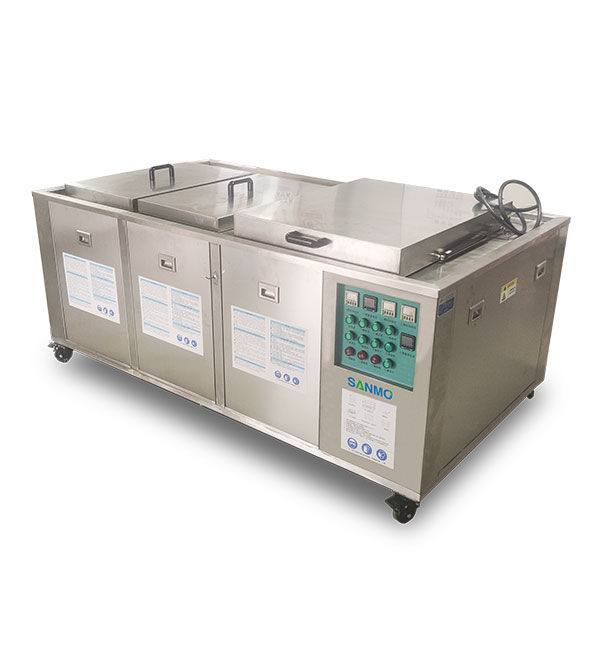
Several factors influence cleaning outcomes. The composition and thickness of deposits determine chemical concentration and current settings. Component geometry, including narrow or long channels, requires adequate flow rates to ensure complete coverage. Water quality, tank maintenance, and filtration efficiency also affect overall performance. Inadequate monitoring of current or chemical concentration can lead to under-cleaning or surface corrosion, emphasizing the importance of precise control and periodic calibration.
Selecting a suitable supplier requires more than evaluating equipment specifications. Buyers should consider technical support, customization options, and after-sales service. Access to compatible cleaning agents, spare parts availability, and compliance with regional safety and environmental regulations are critical. For global operations, suppliers with localized service networks reduce downtime risk and facilitate integration into preventive maintenance programs.
Industrial users face challenges such as uneven cleaning in complex components, scaling of electrolyte solutions, and process variability. Manual interventions are often inconsistent, and over-cleaning can damage critical surfaces, while under-cleaning leaves residues that compromise performance. Three-tank electrolytic cleaning machines address these issues by automating multi-stage processes, providing real-time monitoring, and standardizing procedures for repeatable results.
In automotive manufacturing, these machines clean multi-cavity molds used in high-speed injection molding, ensuring consistent cooling performance and surface quality. Electronics manufacturers utilize them to maintain precision dies for connectors and housings, where even minor residues can affect assembly tolerances. Die casting operations employ three-tank systems to remove oxides and scale from molds, reducing downtime and extending mold life. Across industries, they support preventive maintenance programs and enable scheduled cleaning without halting production.
The market is trending toward intelligent and environmentally friendly systems. Integration with digital factory management allows cleaning cycles to be triggered based on real-time sensor data, minimizing chemical use and energy consumption. Closed-loop fluid systems, automated monitoring, and adaptive current control enhance efficiency while reducing operational costs. Future innovations are expected to focus on smarter process automation, compatibility with advanced mold designs, and eco-friendly electrolyte formulations, aligning with sustainability and Industry 4.0 principles.
Q1: How often should components be cleaned?
Cleaning intervals depend on production volume, material type, and water quality. Many facilities use sensor-based monitoring to schedule condition-based cleaning.
Q2: Are three-tank systems safe for delicate molds?
Yes, when properly configured, electrolytic cleaning removes deposits without mechanical abrasion or surface damage.
Q3: Can these machines reduce maintenance downtime?
Automated, multi-stage cleaning minimizes manual intervention and ensures consistent results, supporting preventive maintenance and reducing unplanned downtime.
Three-tank electrolytic cleaning machines have become essential for maintaining industrial molds and metal components. By combining multi-stage cleaning, precise process control, and automation, they enhance operational efficiency, extend component life, and support consistent product quality. As manufacturing moves toward higher precision and sustainability, these systems will continue to play a crucial role in modern industrial maintenance.
@2024 Shanmo Precision Machinery (Kunshan) Co., Ltd. All rights reserved. Mold waterway cleaning machine,
electrolytic mold cleaning machine, mold cleaning machine manufacturer
TEL:+86 512-55001520
whats app:+86 15599099006 / +86 15599099098
E-Mail:sanmo030788@gmail.com
Add:No. 56, Yangjiaqiao Road, Zhoushi Town, Kunshan City Jiangsu Province


This website uses cookies to ensure you get the best experience on our website.
 Español
 Pусский
 العربية
 Tiếng Việt



 Your phone
 E-mail